About
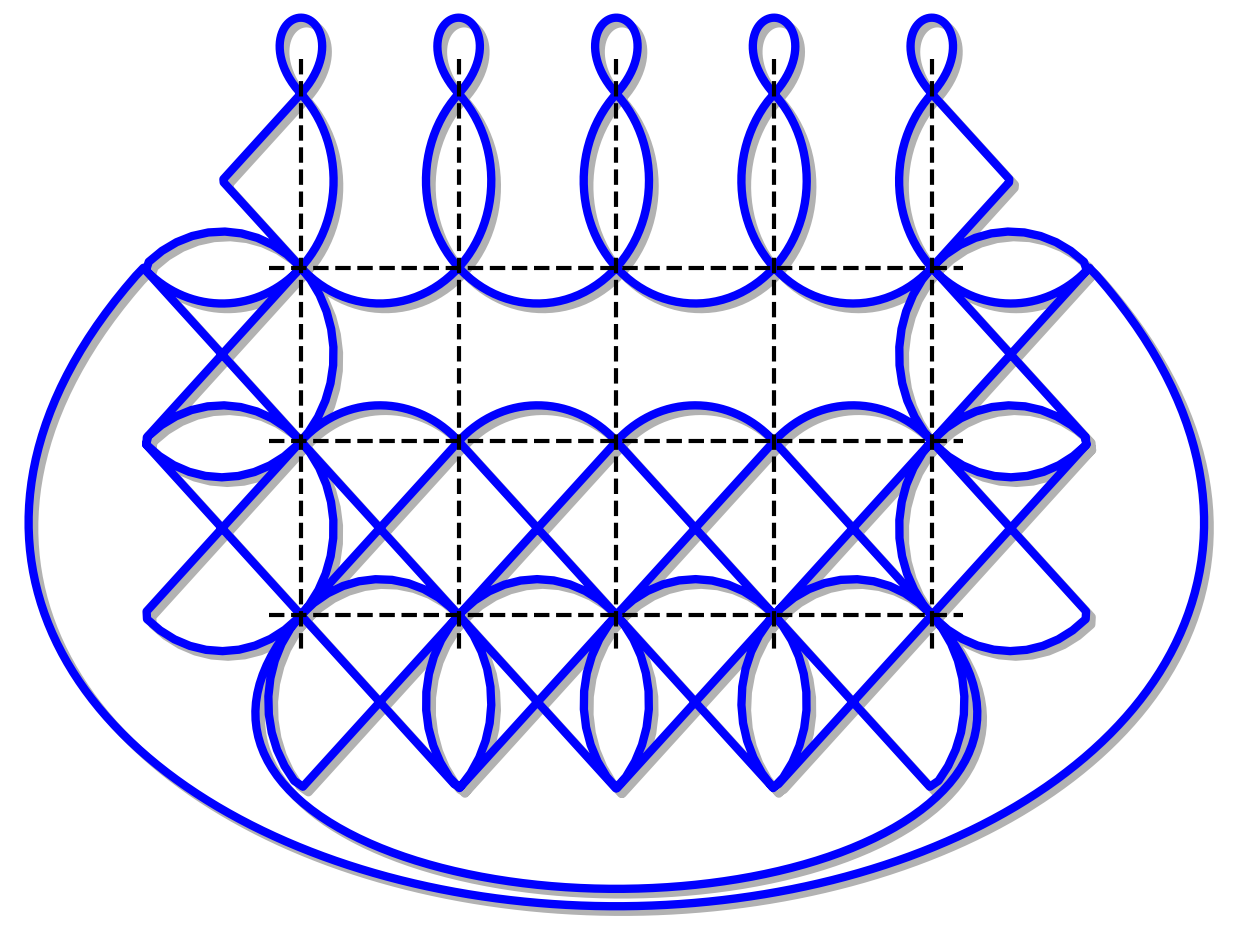
The activity commonly known as “sand drawing” was observed throughout the 20th century in various indigenous societies from Vanuatu (ex New Hebrides, South Pacific). This practice consists in making a figure by drawing a continuous line with the finger—either in the sand or on dusty ground—drawn through the framework of a grid made of either perpendicular lines or dots. In the 1980s, American mathematician Marcia Ascher analyzed, from an ethnomathematical perspective, the corpus of sand drawings collected by British anthropologists John Layard (1942) and A. Bernard Deacon (1934), bringing to light the “mathematical ideas” involved in this practice (Ascher, 1988, 1991). Concomitantly, sand drawings were analyzed by other researchers as a traditional graphic art with—in the societies concerned—a mnemonic dimension involved in the recollection of ritual, mythological and/or environmental knowledge (Huffman 1996, Gell 1998, Zagala 2004, Rio 2005...). In the 2000s, under the “Centre Culturel de Vanuatu” ’s impulse, the practice of sand drawing was revitalized through various cultural and educational projects (Hinge 2008, VKS 2009...).
As a result of this effort, in 2008, the practice of sand drawing was added to the UNESCO’s list of Intangible Cultural Heritage of Humanity. Over the past decade, new research projects have been devoted to the practice of sand drawing through different disciplinary perspectives, including those of the anthropology of memory (Baron, 2020), linguistic and cognitive anthropology (Franjieh 2018, Devylder 2022), and ethnomathematics (Da Silva 2022, Vandendriessche & Da Silva 2022, Vandendriessche 2022).
